Specializing in Canine and Feline Neurology and Neurosurgery


Contents


Welcome

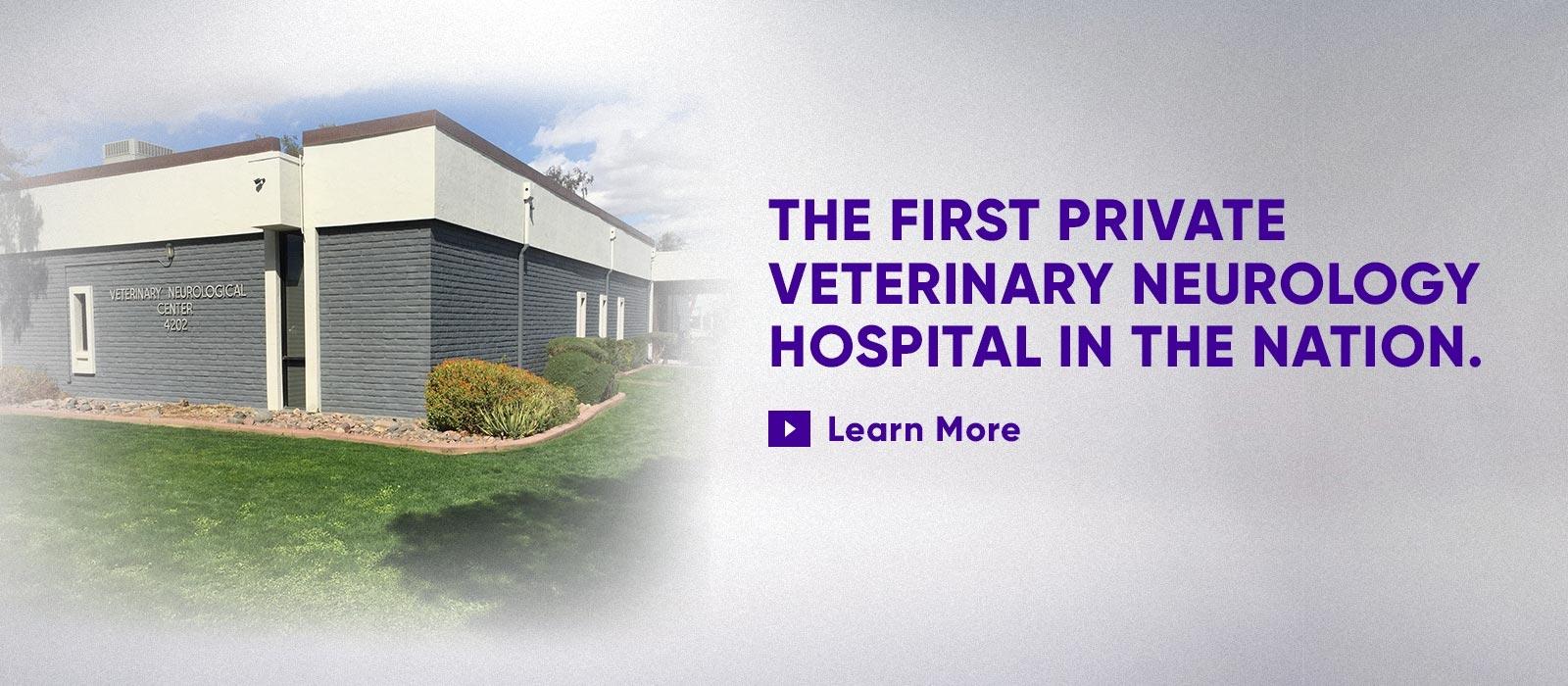
The Veterinary Neurological Center was established in 1985 in Phoenix, Arizona and has a staff of three board certified veterinary neurologists and one neurology resident. Las Vegas, Nevada became the second site for Veterinary Neurological Center in 2001 and currently has one board certified veterinary neurologist and one neurology resident. We are a referral veterinary practice dedicated solely to the diagnosis and treatment of neurological disorders of small animals. The Phoenix staff is comprised of three board certified veterinary neurologists, each university trained in neurology and neurosurgery, one neurology resident, three licensed veterinary technicians, five veterinary assistants, four front office staff and four after hours attendants.

As a means of introducing you to our practice and possibly aiding you in deciding whether or not your pet may have a neurologically related problem, we have listed some of the different problems for which patients have been referred to the Veterinary Neurological Center. This list is followed by examples of diagnostic and surgical procedures done at our facility.

Back to Contents


Neurological and Neuromuscular Problems

Seizures

Limb Paralysis, Weakness

Balance Disorders

Vision Disorders Not Directly Involving the Eye

Pain

Other Neurological or Neuromuscular Problems


Back to Contents

Diagnostics

Some neurological disorders are treated medically and others surgically. An accurate diagnosis is essential. Examples of some of the diagnostic testing and medical and surgical treatments done at the Veterinary Neurological Center are listed below.

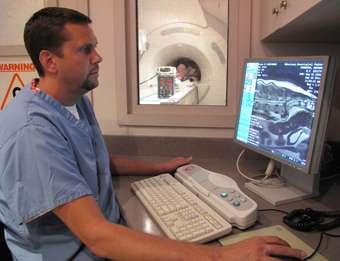
Brain/spine imaging: A GE 9800 CAT scanner with HiLit detectors is located on site at both locations. MR imaging is also available on site in Phoenix and Las Vegas.

Neuromuscular studies: Electromyography, nerve conduction evaluations, and nerve and muscle biopsy procedures.

Evaluation of hearing disorders: Brainstem auditory evoked response testing and impedance audiometry. These studies evaluate the eardrum, middle ear and inner ear structures as well as the auditory nerve and brainstem.

Vertebral and spinal cord evaluation: Spinal radiography including fluoroscopy, myelography and spinal CT scanning.

Spinal fluid evaluation: Spinal fluid collection and on site evaluation.

Anesthesia and surgery: Two complete neurosurgical suites. All anesthetic machines are equipped with isoflurane vaporizers and mechanical respirators. Anesthesia monitoring includes: EKG, blood pressure, respiration, body temperature, expired carbon dioxide, oxygen saturation and, during brain surgery, brainstem auditory evoked response testing.

Brain surgery: Craniotomy for biopsy, tumor removal and decompressive procedures; ventriculoperitoneal shunt placement and endoscopic treatment of hydrocephalus.

Spinal surgery: Hemilaminectomy and laminectomy for treatment of intervertebral disk herniations, tumors, syringomyelia, spinal canal stenosis and other causes of spinal cord compression; surgical repair and stabilization of spinal fractures and dislocations.

Seizure treatment: Seizures disorders are common and, as mentioned above, can be due to numerous causes. The most common cause of seizures in dogs between one and three years of age is primary (idiopathic) epilepsy. Primary epilepsy is generally treated with various anticonvulsant medications. Although not always required, a complete seizure workup would include: bloodwork to screen for metabolic or infectious causes, brain imaging (CT or MRI scan) to evaluate for structural brain problems, and spinal fluid analysis to evaluate for inflammation.

Back to Contents


Staff Neurologists/Neurosurgeons

Donald Levesque, D.V.M.

Scott B. Plummer, D.V.M.

Kim E. Knowles, D.V.M., M.S.

Jason M. Evans, D.V.M., M.S.

Back to Contents


Related Sites

Back to Contents

Contact Information

If you wish more information regarding our hospital,

please contact us at the office address, phone or fax number below:


Phoenix Street Address:
4202 East Raymond Street
Phoenix, Arizona 85040-1935
Office Phone: 602-437-1488      Fax Number: 602-437-5425

Directions: The Veterinary Neurological Center is located in Phoenix, south of Sky Harbor Airport. Raymond Street is one block north of Interstate 10 at the 40th Street exit. We are east of 40th Street, between University Drive and Interstate 10.


Las Vegas Street Address:
4445 North Rainbow Boulevard
Las Vegas, Nevada 89108-5711
Office Phone: 702-655-1216     Fax Number: 702-655-9412

Directions: From I-95 take the Craig Road exit. Proceed east on Craig Road one block to Rainbow Blvd. Go north on Rainbow. VNC is located just north of the Rinbow/Craig intersection on the west side of the street.


Office Hours for Both Clinics:
9 a.m. to 5 p.m., Monday through Friday. Referrals scheduled by appointment only.
Back to Contents

Thank you for visiting our site. Since we are still under construction, please return soon for updated veterinary neurology information.

Last revised: September 24, 2005.